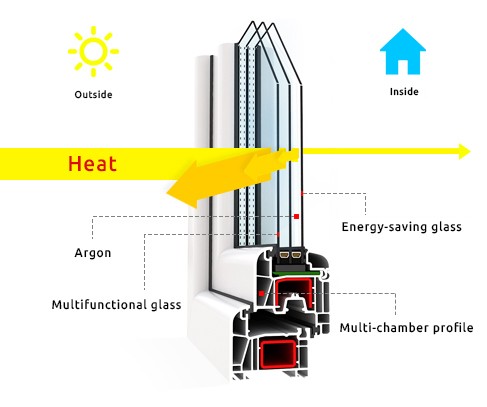
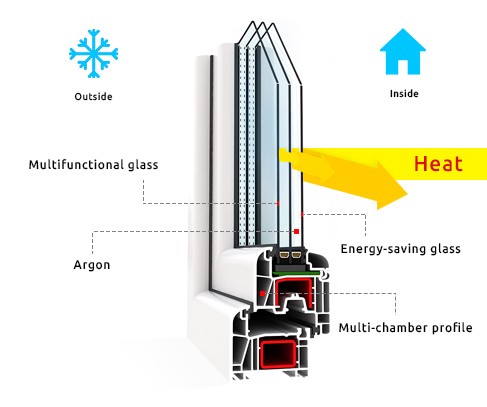
The type of glass and the glazing unit itself depend on the requirements for the window regarding sound and thermal insulation, sun protection, or visibility restriction. In the production of glazing units, we use the following types of glass:
Energy-efficient glass – glass with energy-saving properties. The special coating on the glass retains heat inside the room.
Multifunctional glass – glass with both energy-saving and sun-protective properties. The use of multifunctional glazing units allows for savings on heating in winter and air conditioning in summer.
ENERGY-EFFICIENT GLAZING UNITS - PROVIDE RESISTANCE TO HEAT TRANSFER UP TO 40% HIGHER THAN REGULAR GLAZING UNITS.
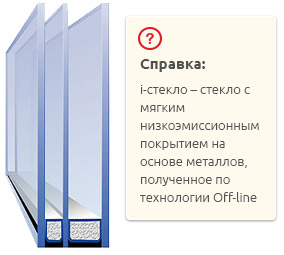
Advantages of energy glass
- Reduced heating costs
- High light transmittance
- Reduced internal condensation
Multifunctional glass is a universal glass that combines the properties of energy-efficient and sun-protective glass.
Advantages of multifunctional glass
- Reduced heating costs
- Reduced air conditioning costs
- High light transmittance
- Reduced internal condensation
- Light reflectivity from the outside
Filling the glazing unit chambers with argon
Together with the use of low-emissivity glass to improve thermal insulation, the glazing unit chambers are filled with inert gas - argon. Gas is a better thermal insulator than air.
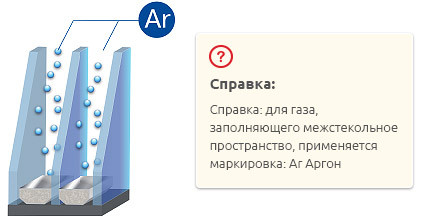
Example: the construction of a multifunctional glazing unit in the order has the conditional designation: 4CGS – 8Ar - 4 - 10Ar - 4i
This means that the double-pane glazing unit is made of glass with a thickness of 4 mm. The distance between the glasses is 8 mm and 10 mm. The first glass is multifunctional (4CGS), the second glass is regular (4), and the third glass is energy-efficient (4i). The space between the glasses is filled with argon (8Ar and 10Ar)